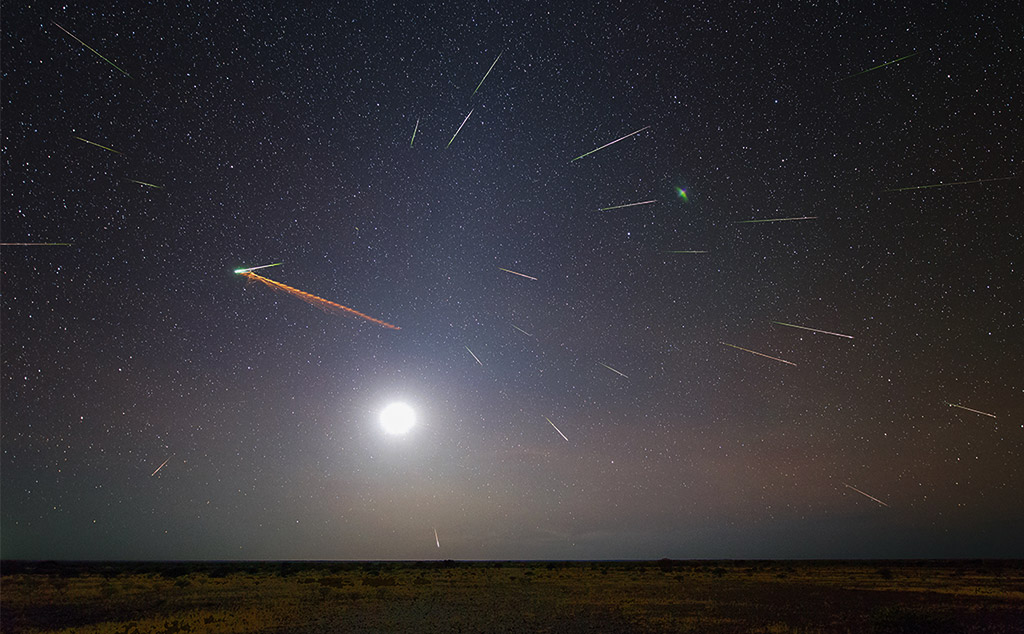
Meteor showers occur when Earth passes through debris trails left by comets, causing particles to burn up in the atmosphere. Although the meteors travel on parallel paths, perspective makes them appear to radiate from a single point, known as the radiant. Showers are named after the constellation where this radiant is located. While most meteors are smaller than a grain of sand, dense debris fields can trigger "meteor storms" with over 1,000 meteors per hour. This phenomenon also occurs on other planets like Mars. For the best viewing, observers should wait until after midnight when the moon is less than half-illuminated.
The Eta Aquarids meteor shower peaks during early May each year. These meteors are known for their speed.
Learn More
The Perseids meteor shower peaks in mid-August, and is the most popular meteor shower of the year.
Learn More
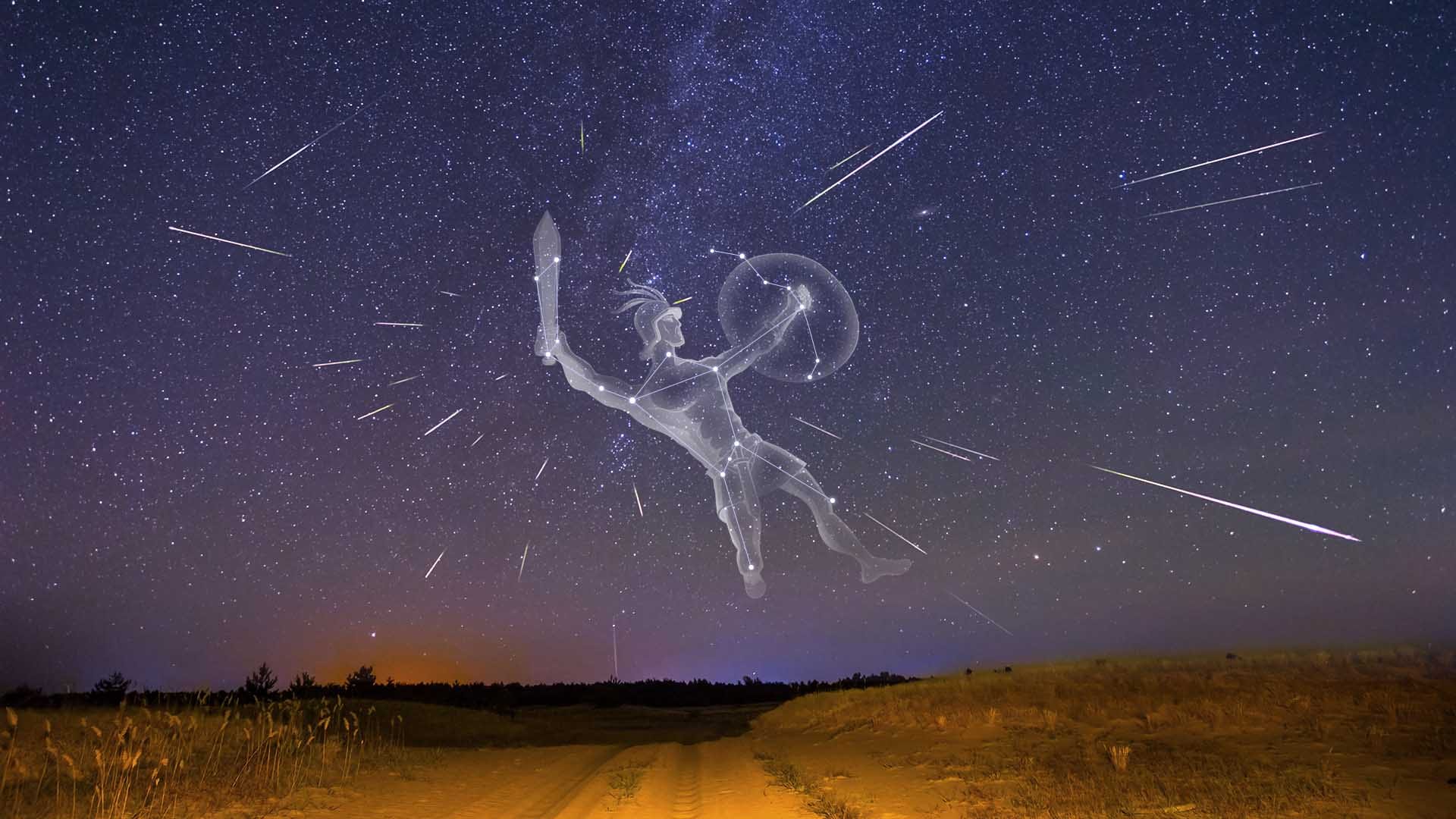
The Orionids, which peak during mid-October each year, are considered to be one of the most beautiful showers of the year.
Learn More
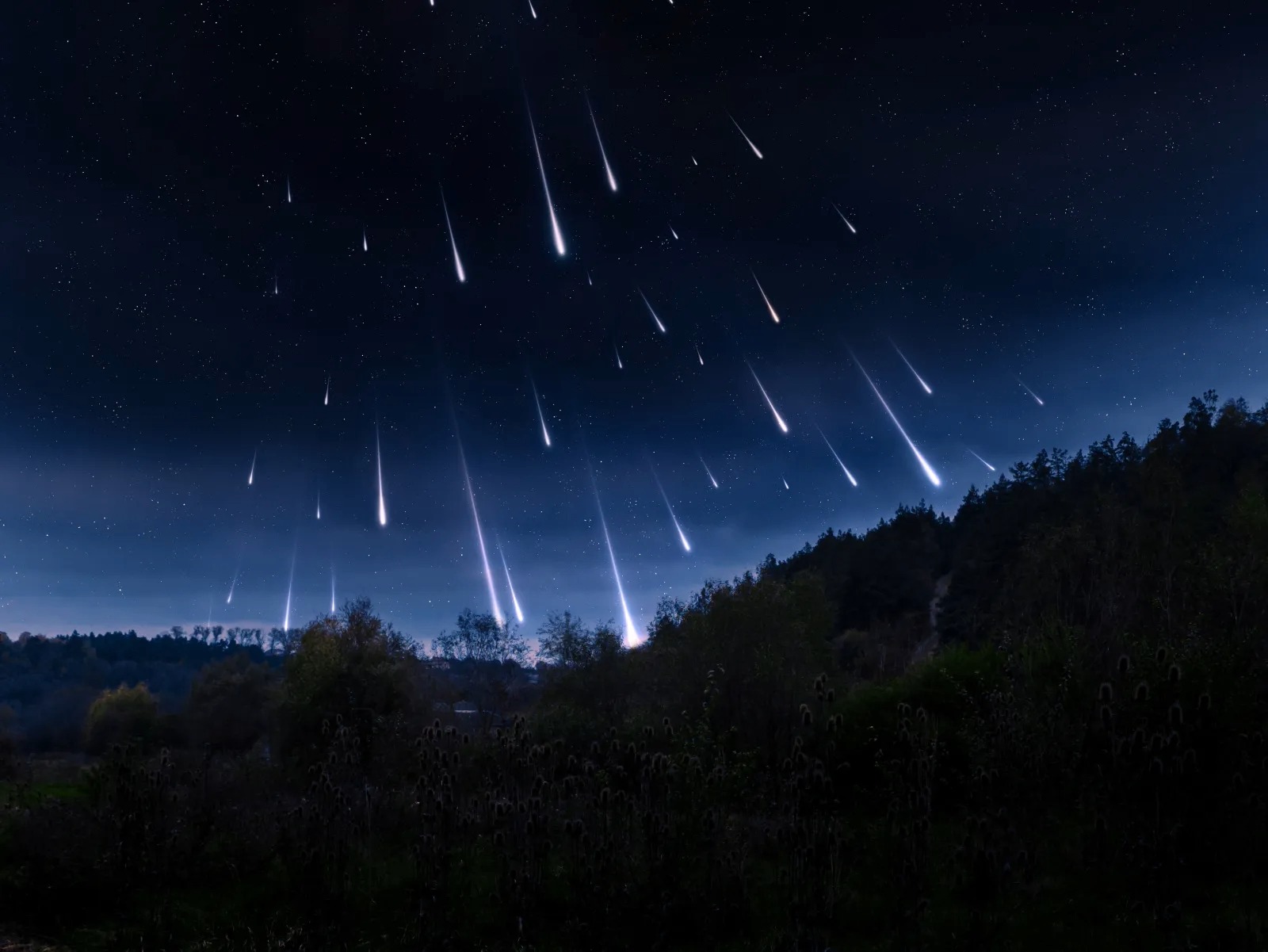
The Quadrantids, which peak during early-January each year, are considered to be one of the best annual meteor showers.
Learn More